
- By admin
- In Tornado Shelter
What is a Storm Shelter? A Practical Guide for Homeowners
What is a storm shelter?
A storm shelter is a reinforced safe space designed to protect people during tornadoes and severe wind storms. Unlike a basement corner or an interior bathroom, a true storm shelter is built specifically to remain intact during extreme weather and to protect occupants from flying debris and structural collapse. For many families, it is the most dependable place to go when a tornado warning is issued.
Why does this matter?
Most homes, even well-built ones, are not engineered to handle the most dangerous forces created by tornadoes. When storms become severe, the biggest risks often come from debris breaking through walls, windows failing, and parts of the structure giving way. In those moments, having a dedicated shelter is not about comfort or convenience. It is about knowing you have a place designed for survival when the rest of the home may not provide enough protection.
For homeowners in tornado-prone regions, a storm shelter offers something that is hard to put a price on: peace of mind and a clear plan when seconds matter.
Storm shelter basics: how they work
At its core, a storm shelter works by creating a hardened space that can withstand conditions that typical residential construction cannot. These shelters are usually built from reinforced steel or concrete and are anchored securely to a foundation or installed below ground. The purpose is simple. The shelter must stay in place, stay closed, and stay structurally sound while dangerous winds and debris are happening outside.
A properly built shelter also includes door systems and ventilation designed for short-term occupancy. Most tornado warnings last minutes, not days, so shelters are designed to keep people safe through the peak of the storm until it is safe to come out.
Types of storm shelters and how to choose
One of the first questions most homeowners ask is what kind of storm shelter they should consider. The right answer depends on your home layout, your budget, your accessibility needs, and how quickly you want to be able to reach the shelter during an emergency.
In-ground storm shelters are installed below the surface, often in a garage floor, basement slab, or yard near the home. Many people choose these because they are naturally protected from direct wind exposure and can be a good option for homes without basements. However, they do require excavation, and drainage planning is important to prevent water concerns.
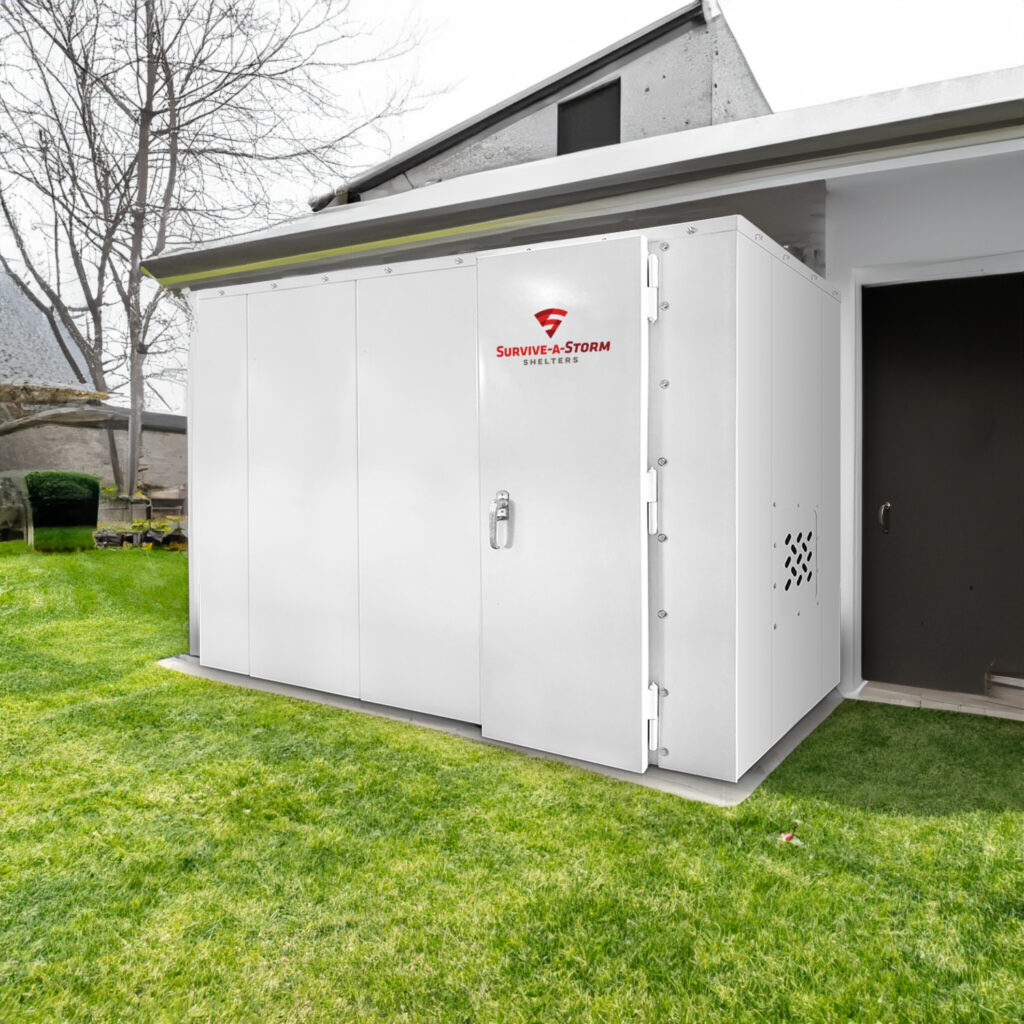
Above-ground storm shelters, sometimes called safe rooms, are installed inside a garage or within the home and are anchored to a concrete slab or foundation. These are popular because they are easy to access quickly, especially at night or during fast-moving storms. For families with children, older adults, or mobility concerns, above-ground shelters can be a practical solution because they do not require stairs or ladders.
Some homeowners choose smaller indoor shelter units that fit into compact spaces such as a corner of a garage or a reinforced interior area. There are also specialized options like under-bed shelters for situations where space is limited, though sizing and certification become especially important with smaller designs.
For schools, businesses, or larger facilities, community storm shelters are sometimes built to protect many occupants at once. These are typically larger projects with additional compliance requirements.
What to look for when buying a storm shelter
Buying a storm shelter is different from buying most home improvement products because it is a life-safety decision. The most important factor is whether the shelter meets recognized safety standards and has documentation to support its design. Homeowners should feel comfortable asking what the shelter is built to withstand and whether it follows national storm shelter guidelines.
Installation is just as important as the shelter itself. A shelter must be properly anchored to a foundation or installed correctly below ground. A unit that is well-built but poorly installed may not perform as intended. Experienced installers should evaluate the placement, the foundation, and the anchoring method before the shelter is ever put into service.
Door design is another critical part of shelter safety. The door must close securely, operate smoothly, and be usable by everyone in the household. In an emergency, you do not want a complicated locking system or something that is difficult for a child or older adult to manage.
Homeowners should also think carefully about size and occupancy. The shelter needs to fit everyone who may realistically use it, including pets if they will be brought inside during warnings. At the same time, bigger is not always better if it creates space or budget challenges. The best shelter is one that is accessible, certified, and properly installed.
Common mistakes or misconceptions
One common misconception is that an interior closet or bathroom is essentially the same as a storm shelter. While interior rooms can sometimes reduce exposure, they are not purpose-built protective structures. A storm shelter is designed specifically for debris resistance and structural safety.
Another mistake is assuming that any steel enclosure is automatically a storm shelter. Strength comes from engineering, testing, and proper anchoring, not just appearance. Homeowners should always ask what standards the shelter meets rather than relying on marketing language.
Some people also delay the decision until after a close call. In my experience, families often start seriously researching shelters only after a tornado warning feels too close for comfort. The best time to plan is before you are in that moment.
Expert tips based on real experience
After working with homeowners through the shelter selection process, one of the most practical lessons is that accessibility matters as much as strength. The shelter you can reach in seconds is the shelter that will actually protect you. Placement should be based on real-life scenarios, such as nighttime warnings, power outages, or children needing guidance.
It is also worth taking the time to ask direct questions about certification, installation requirements, and long-term support. A storm shelter should not leave you guessing. It should give you confidence that it was designed, installed, and supported correctly.
Keeping a few basic items nearby, such as a flashlight and a phone charger, is also a simple step that makes shelter use easier during stressful moments.
FAQ: storm shelter questions homeowners ask
Many homeowners ask whether they still need a storm shelter if they have a basement. Basements can offer more protection than upper floors, but they are not the same as a certified storm shelter. Some families choose shelters for added confidence and protection.
Another common question is cost. Prices vary depending on shelter type, size, and installation, but many residential shelters start in the several-thousand-dollar range.
Homeowners also ask how long they will be inside. In most cases, tornado sheltering is short-term. The goal is to stay protected through the most dangerous part of the storm until it is safe to exit.
It is also very common to ask whether shelters can be installed in existing homes. In many cases, yes. Retrofit options are available for garages, basements, and yards.
What is a storm shelter?
A storm shelter is a reinforced safe space designed to protect people during tornadoes and severe wind storms. Unlike a basement corner or an interior bathroom, a true storm shelter is built specifically to remain intact during extreme weather and to protect occupants from flying debris and structural collapse. For many families, it is the most dependable place to go when a tornado warning is issued.
Why does this matter?
Most homes, even well-built ones, are not engineered to handle the most dangerous forces created by tornadoes. When storms become severe, the biggest risks often come from debris breaking through walls, windows failing, and parts of the structure giving way. In those moments, having a dedicated shelter is not about comfort or convenience. It is about knowing you have a place designed for survival when the rest of the home may not provide enough protection.
For homeowners in tornado-prone regions, a storm shelter offers something that is hard to put a price on: peace of mind and a clear plan when seconds matter.
Storm shelter basics: how they work
At its core, a storm shelter works by creating a hardened space that can withstand conditions that typical residential construction cannot. These shelters are usually built from reinforced steel or concrete and are anchored securely to a foundation or installed below ground. The purpose is simple. The shelter must stay in place, stay closed, and stay structurally sound while dangerous winds and debris are happening outside.
A properly built shelter also includes door systems and ventilation designed for short-term occupancy. Most tornado warnings last minutes, not days, so shelters are designed to keep people safe through the peak of the storm until it is safe to come out.
Types of storm shelters and how to choose
One of the first questions most homeowners ask is what kind of storm shelter they should consider. The right answer depends on your home layout, your budget, your accessibility needs, and how quickly you want to be able to reach the shelter during an emergency.
In-ground storm shelters are installed below the surface, often in a garage floor, basement slab, or yard near the home. Many people choose these because they are naturally protected from direct wind exposure and can be a good option for homes without basements. However, they do require excavation, and drainage planning is important to prevent water concerns.
Above-ground storm shelters, sometimes called safe rooms, are installed inside a garage or within the home and are anchored to a concrete slab or foundation. These are popular because they are easy to access quickly, especially at night or during fast-moving storms. For families with children, older adults, or mobility concerns, above-ground shelters can be a practical solution because they do not require stairs or ladders.
Some homeowners choose smaller indoor shelter units that fit into compact spaces such as a corner of a garage or a reinforced interior area. There are also specialized options like under-bed shelters for situations where space is limited, though sizing and certification become especially important with smaller designs.
For schools, businesses, or larger facilities, community storm shelters are sometimes built to protect many occupants at once. These are typically larger projects with additional compliance requirements.
What to look for when buying a storm shelter
Buying a storm shelter is different from buying most home improvement products because it is a life-safety decision. The most important factor is whether the shelter meets recognized safety standards and has documentation to support its design. Homeowners should feel comfortable asking what the shelter is built to withstand and whether it follows national storm shelter guidelines.
Installation is just as important as the shelter itself. A shelter must be properly anchored to a foundation or installed correctly below ground. A unit that is well-built but poorly installed may not perform as intended. Experienced installers should evaluate the placement, the foundation, and the anchoring method before the shelter is ever put into service.
Door design is another critical part of shelter safety. The door must close securely, operate smoothly, and be usable by everyone in the household. In an emergency, you do not want a complicated locking system or something that is difficult for a child or older adult to manage.
Homeowners should also think carefully about size and occupancy. The shelter needs to fit everyone who may realistically use it, including pets if they will be brought inside during warnings. At the same time, bigger is not always better if it creates space or budget challenges. The best shelter is one that is accessible, certified, and properly installed.
Common mistakes or misconceptions
One common misconception is that an interior closet or bathroom is essentially the same as a storm shelter. While interior rooms can sometimes reduce exposure, they are not purpose-built protective structures. A storm shelter is designed specifically for debris resistance and structural safety.
Another mistake is assuming that any steel enclosure is automatically a storm shelter. Strength comes from engineering, testing, and proper anchoring, not just appearance. Homeowners should always ask what standards the shelter meets rather than relying on marketing language.
Some people also delay the decision until after a close call. In my experience, families often start seriously researching shelters only after a tornado warning feels too close for comfort. The best time to plan is before you are in that moment.
Expert tips based on real experience
After working with homeowners through the shelter selection process, one of the most practical lessons is that accessibility matters as much as strength. The shelter you can reach in seconds is the shelter that will actually protect you. Placement should be based on real-life scenarios, such as nighttime warnings, power outages, or children needing guidance.
It is also worth taking the time to ask direct questions about certification, installation requirements, and long-term support. A storm shelter should not leave you guessing. It should give you confidence that it was designed, installed, and supported correctly.
Keeping a few basic items nearby, such as a flashlight and a phone charger, is also a simple step that makes shelter use easier during stressful moments.
FAQ: storm shelter questions homeowners ask
Many homeowners ask whether they still need a storm shelter if they have a basement. Basements can offer more protection than upper floors, but they are not the same as a certified storm shelter. Some families choose shelters for added confidence and protection.
Another common question is cost. Prices vary depending on shelter type, size, and installation, but many residential shelters start in the several-thousand-dollar range.
Homeowners also ask how long they will be inside. In most cases, tornado sheltering is short-term. The goal is to stay protected through the most dangerous part of the storm until it is safe to exit.
It is also very common to ask whether shelters can be installed in existing homes. In many cases, yes. Retrofit options are available for garages, basements, and yards.